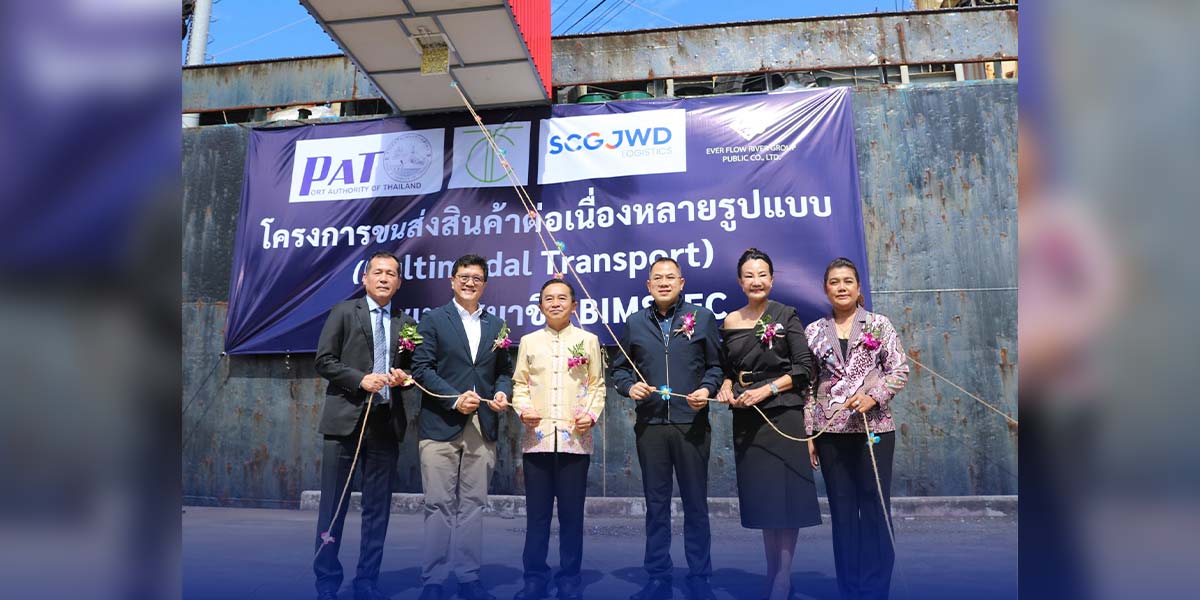
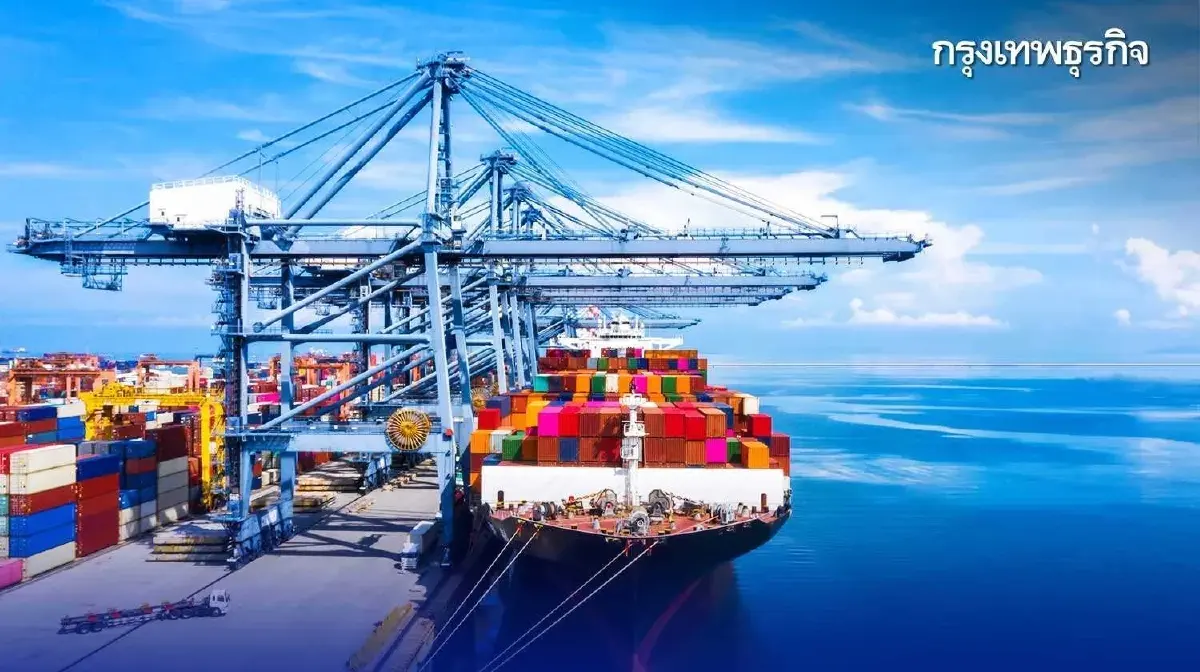
Port Authority of Thailand (PAT) has highlighted the growing potential of Ranong Port, emphasizing its readiness to serve as a sandbox for the government’s planned “Land Bridge” project. With container throughput surging and increasing regional connectivity, Ranong Port is positioning itself as a strategic hub linking the Bay of Bengal Initiative for Multi-Sectoral Technical and Economic Cooperation (BIMSTEC).
Kriengkrai Chaisiriwongsuk, Director of PAT, stated that Ranong Port plays a critical role in international trade due to its strategic location. It serves as a vital gateway connecting Thailand’s Andaman coast to South Asia, the Middle East, Africa, Europe, and BIMSTEC member countries.

Currently, Ranong Port has the capacity to handle around 78,000 TEUs annually, accommodating both containerized and general cargo. Over the past 11 months (October 2024 – August 2025), the port processed 6,300 TEUs, totaling 186,000 tons of cargo from 235 vessel calls. PAT projects container volume for fiscal year 2025 at 6,400 TEUs, representing a 140% increase year-on-year, though overall cargo tonnage is expected to decline 39% to 196,000 tons. PAT also forecasts a profit of THB 5 million, a sharp rise from last year’s THB 300,000. While general cargo has decreased, particularly due to reduced corn imports from Myanmar, exports of products such as paper rolls, cement, sanitary ware, fertilizers, plastic pellets, and tires have grown.
The expansion of container cargo is largely driven by Myanmar’s internal situation, which has prompted operators to use Ranong Port more frequently. Additionally, oil exploration concessions in Myanmar have boosted demand for offshore support vessels utilizing the port. These factors reflect Ranong Port’s growing credibility and operational capacity.
Strategically, Ranong Port’s direct access to the Bay of Bengal reinforces its role as Thailand’s “Western Gateway” to BIMSTEC and beyond. PAT has strengthened partnerships with key ports in Bangladesh, India, and Sri Lanka through memoranda of understanding (MOUs) and regular joint working group meetings to exchange information and plan cooperative development. Such initiatives support international trade and logistics, moving Ranong Port closer to becoming a regional trade and logistics hub.
Kriengkrai added that PAT will continue upgrading the port’s infrastructure and management systems to align with global standards. About THB 30 million has been allocated for fiscal year 2026 to acquire new cranes, heavy-duty equipment, and enhance multimodal connections by road, rail, and air. These improvements aim to accommodate rising cargo demand, reduce reliance on the Strait of Malacca, and strengthen Thailand’s competitiveness in BIMSTEC and ASEAN.
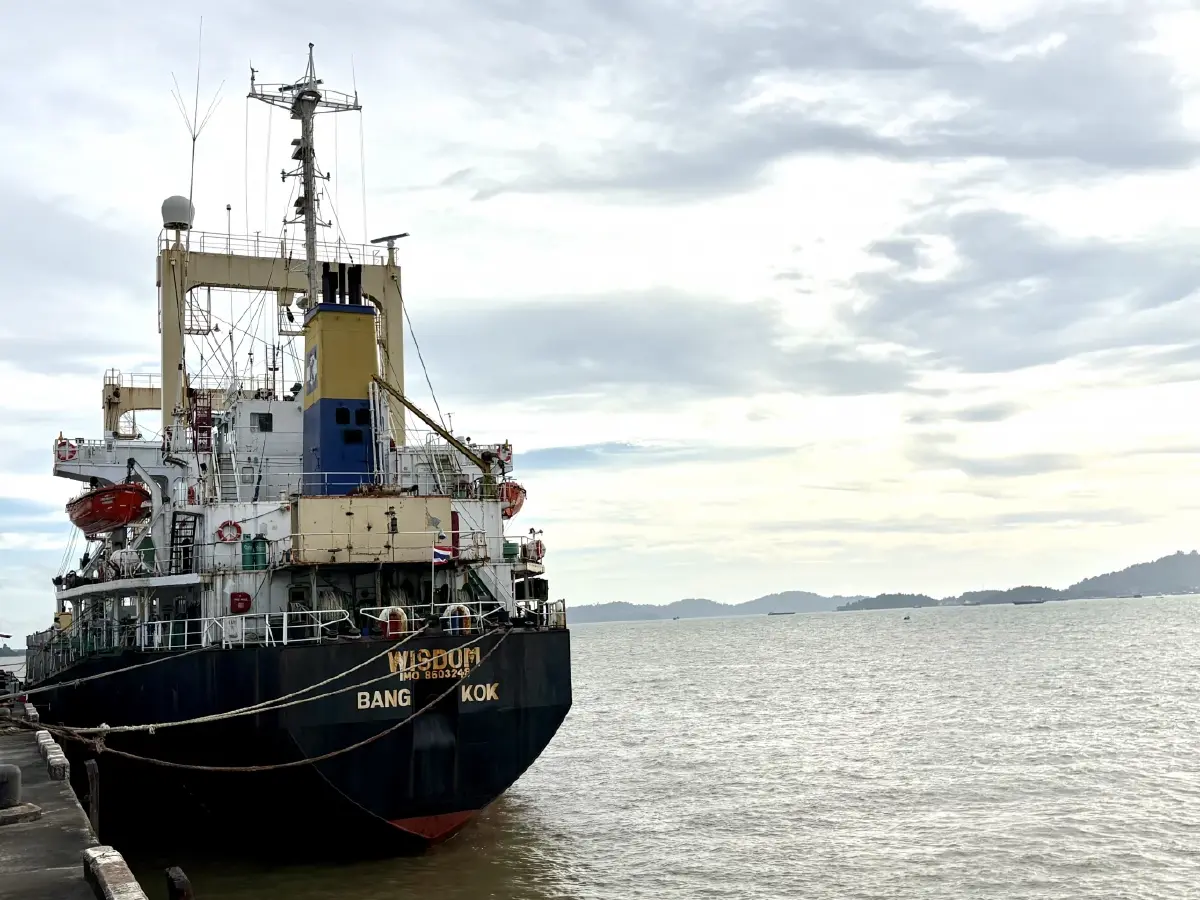
Looking ahead, Ranong Port’s role will evolve once the government launches the Land Bridge project, linking Chumphon and the new Ranong Port to create a direct trade corridor between the Gulf of Thailand and the Andaman Sea. Under this plan, Ranong Port will shift from a primary port to a supporting hub focusing on niche markets, such as frozen goods, Thai-Myanmar border trade, and fast-track cargo. It will also serve as a logistics and distribution base that adds value through warehousing services and attracts SMEs and local businesses.
Ranong Port is also being prepared as a policy and operational sandbox for the Land Bridge, testing systems such as multimodal transport, digital logistics, customs processes, and green port models to support environmental standards. This role as a prototype facility will provide critical lessons and models for the successful development of the new Ranong Port under the Land Bridge project.
Currently, Ranong Port has two berths: a 134-meter multipurpose berth for vessels up to 500 gross tons and a 150-meter container berth accommodating vessels up to 12,000 DWT. The port channel is 120 meters wide, 8 meters deep at low tide, and extends 28 kilometers, making it suitable for large cargo vessels. Additionally, the port has more than 36,000 square meters of storage facilities, including warehouses, general cargo yards, and container yards with a maximum capacity of 648 TEUs.
(Proofread Thai by Suree Silawong)
Photos and news article from https://www.bangkokbiznews.com/business/economic/1199895 (September 23rd, 2025)